- Dance Classes & Music Lessons
- 310.406.1730


At Home Confidence Kit: Violin
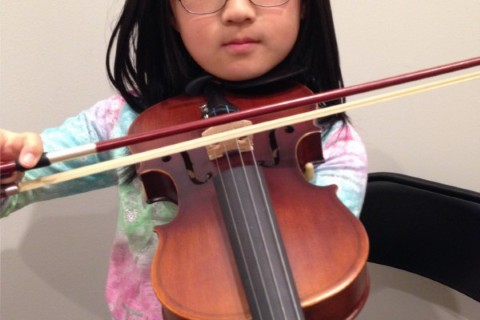
Early age violin students (and a bit beyond) on violin is mostly “under the surface”: posture, listening, coordination, and learning that practice and music can be fun, not a fight. Some kids are brand‑new, some start closer to 8–9 – both are normal.
Older violin students an focus longer and follow multi‑step directions. Some are starting violin for the first time at this age, others have played for years. This stage is where real violin foundations and musical identity take shape.
What You Violin Student is Working On
Younger Violin Student:
Stand or sit and hold the violin comfortably (with lots of reminders)
Hold and move the bow with a relaxed, correct grip
Listen for high vs low, loud vs soft, fast vs slow
Play open strings and very short patterns with a steadier bow
Copy by ear before heavy reading (listen → imitate → then read)
Do 5–10 minutes of home practice most days, with you as a practice partner
Older Violin Student:
Hold violin and bow with more consistent, relaxed form
Play open strings and fingers with clearer tone and steadier bow
Read notes and rhythms while still using ear training
Keep a steady beat and play basic to intermediate rhythms
Play short to longer pieces from beginning to end
Practice 15–30 minutes most days with more independence
For more advanced students: refine tone, intonation, shifting, vibrato, and ensemble parts
Perform with expression and manage performance nerves
Younger Violin Student:
Each time your child has one of these wins, add a sticker or checkmark. At the end of 30 days, look at how far they’ve come.
Came to the violin without a big fight
Stood or sat in “ready” / “rest” position when you asked
Held the violin or bow correctly for a few seconds
Played open strings with a mostly steady bow
Copied back a short rhythm or bow pattern from the teacher/you
Focused for 5–10 minutes of practice with your help
Played a tiny piece or pattern from memory
Tried again after a squeak or scratch without giving up
Played something (even open strings) for a family member
At the end of 30 days, point out 2–3 things they can do now that they couldn’t or wouldn’t do on day 1. That’s what progress looks like at young ages.
Older Violin Student:
This chart is more about habits and mindset than perfection. Each time one of these happens, mark it. At the end, talk about the musician they’re becoming.
Practiced at least 15 minutes in a day
Practiced 3+ days in a week
Kept a decent bow hold and posture for most of a piece
Played a section or piece with a steady beat
Played a short song or section from beginning to end (even with small mistakes)
Broke down a hard spot into small bits and drilled it
Used a tuner, drone, or recording to improve intonation
Played for someone outside immediate family (recital, school, church, friend)
Used a coping strategy for nerves (breathing, mental run‑through)
Younger Violin Student:
1. Bow‑Hold Hero
Off the violin, practice making the bow hand like in lessons (curved fingers, pinky on top).
See how long they can “freeze” in a good bow hold.
Give it a fun name (“spider hand,” “bunny hand”).
2. High–Low Detective
Play a high note, then a low open string.
Ask: “Is this HIGH or LOW?”
Let them point to which string is higher/lower.
Builds: ear and string awareness.
3. One‑Measure Loop
Pick the trickiest one measure in their piece.
Have them play just that measure 3–5 times, no stopping.
Celebrate when it sounds smoother.
Builds: focused practice, not just run‑throughs.
Older Violin Student:
1. One‑Measure (or One‑Line) Challenge
Pick the trickiest measure or short line.
Have them play just that spot 3–5 times in a row, no stopping.
Celebrate when it’s smoother.
Builds: focused practice.
2. Tiny Recital + Reframe
Once a week:
“Play this like you’re in a recital. No stopping; if there’s a mistake, you just keep going.”
Before: “Your job isn’t to be perfect; your job is to share the music with the skills you have today.”
After: “What went better than you expected?” / “What did you learn for next time?”
Builds: performance confidence and resilience.
3. Monthly Goal Chat
Once a month, ask:
“What’s one thing you’d love to feel solid on next month (piece, shift, audition)?”
“What’s a tiny step toward that this week?”
Then step back and let them own it.
4. Self‑Review Clip (for older/advanced)
If they’re open to it, have them record 30–60 seconds of a piece.
Ask: “What do you like?” and “What would you change?”
No extra critique unless they ask.
Younger Violin Student:
Older Violin Student: