- Dance Classes & Music Lessons
- 310.406.1730


At Home Confidence Kit: Drums
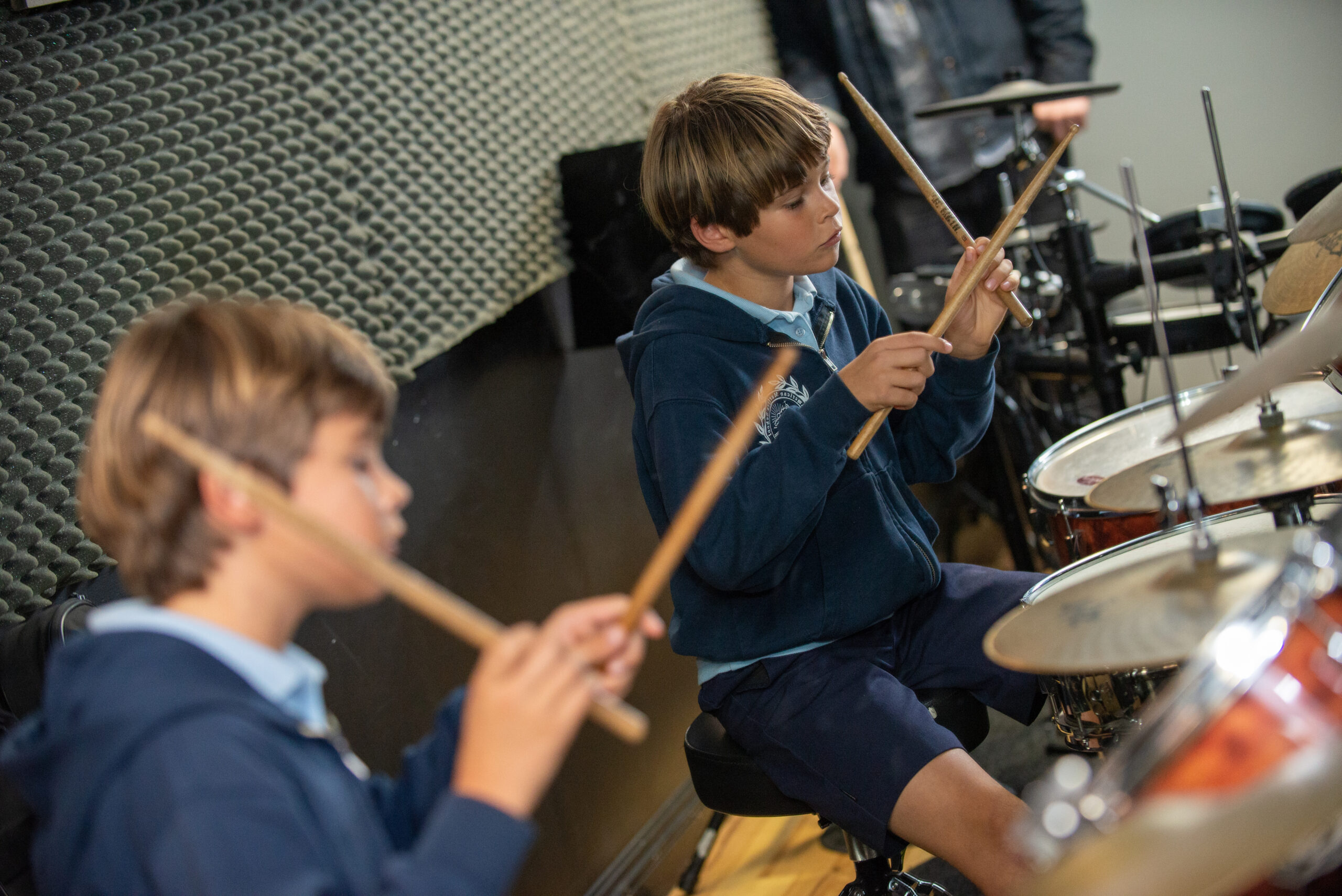
Early age drums are about building control, coordination, and a love for rhythm. Some kids are brand-new, some have already been “banging on things” for years.
Older drum students can be a serious craft or a core part of who they are. Some older students are brand‑new, while others have played for years. The game is musicality, consistency, and using drums as a healthy outlet.
What You Drum Student is Working On
Younger Drum Student:
Hold sticks comfortably and control rebounds (without sticks flying)
Keep a steady beat on a pad or snare
Play simple grooves: hands together, then hands + foot
Follow 2–4 step instructions (“count 4, then play right‑left‑right‑left”)
Start playing more complex beats and simple fills
See practice as “a little bit most days,” not a giant fight
Older Drum Student:
Play more complex grooves and fills (rock, funk, etc.)
Coordinate both hands and both feet comfortably across the kit
Lock in with a click, tracks, or a band with solid time
Read and remember more detailed patterns and full song forms
Support a band: starts/stops, dynamics, listening and adjusting
Self‑direct practice: warm‑ups, technique, grooves, songs
Younger Drum Student:
Each time your child has one of these wins, add a sticker or checkmark. At the end of 30 days, notice how both skills and habits have grown.
Practiced at least 5-10 minutes on a pad or kit in a day
Practiced 3+ days in a week
Held sticks in a relaxed, correct grip most of the time
Kept a steady beat with hands alone, then added a foot (even briefly)
Played a simple beat in time for 4–8 bars
Followed a 2–4 step instruction from the teacher
Played along with one track or metronome for part of a song
Fixed a “train‑wreck” section by slowing it down and trying again
Talked about something they’re working on (“my fills,” “my hi‑hat,” “my foot”)
Played a beat or short piece for a family member
At the end of 30 days, show them how many actions they took. That’s what a real drummer’s month looks like.
Older Drum Student:
Each time one of these happens, mark it. At the end, talk about the musician they’re becoming, not just “how fast their hands are.
Practiced 20+ minutes on at least 3 days in a week
Set a simple weekly practice plan and mostly followed it
Played a groove cleanly with hands and feet for 8+ bars
Used a metronome or click and stayed with it for a full section
Learned a specific fill and put it in the right place in a song
Played along with a full song from start to finish (even if simplified)
Showed up prepared for class/rehearsal (knew their parts)
Recovered from a mid‑song mistake without stopping everything
Talked about what they’re improving (“my timing,” “my dynamics,” “my left hand”)
Younger Drum Students:
1. Copy‑Cat Beat
You clap/tap a simple rhythm (on table or pad).
They copy it.
Then move it to the kit: hi‑hat or snare only.
Builds: listening, rhythm, fun.
2. 4‑Bar Groove Challenge
Pick one basic beat from lessons.
Ask: “Can you play this for 4 bars without stopping?”
Next week, level up to 8 bars.
Builds: time, stamina, focus.
3. Song Pulse
Put on a favorite song.
First, have them tap quarter‑note pulse on knees or pad.
Then, let them play any simple beat along with the song.
Builds: internal time and playing with music.
Older Drum Student:
1. Groove + Fill Loop
Have them pick one groove and one short fill from lessons.
Play: 3 bars groove + 1 bar fill, looped for 2–4 cycles.
Count how many loops they do without “falling off.”
Builds: form and control.
2. Set‑List Check‑In
Once a month, ask:
“What songs or skills are you working on right now?”
“Anything coming up (recital, show, audition) you want me to know about?”
No fixing; just signal that you care.
3. Practice vs Scroll Trade
On a random weekday:
“Totally your call, but if you trade 10 minutes of scrolling for 10 minutes on the kit, I’d love to hear one groove after.”
Small nudge, not a command.
Younger Drum Student:
Older Drum Student: