- Dance Classes & Music Lessons
- 310.406.1730


At Home Confidence Kit: 5-7½ Year Olds
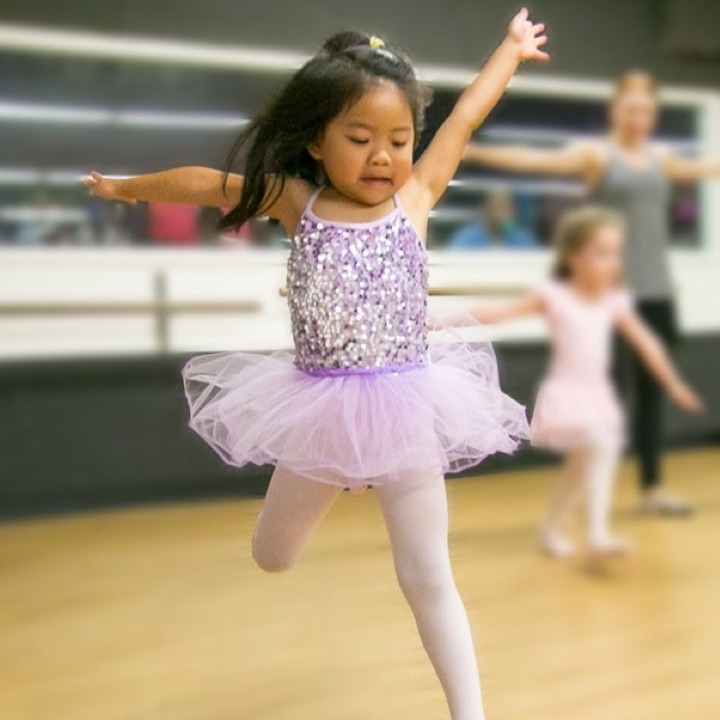
At this age, your dancer is learning to control their body, remember longer dances, and feel confident performing with a group. Here’s what our 5–7½‑year‑olds are practicing all year:
Coordination & Movement
Controlled hops and single‑foot jumps
Moving sideways with smooth, fluid transitions
Small leaps and direction changes
Pointing toes and stretching legs with proper form
Balancing on one foot for several seconds
Using props in coordinated ways
Spins and turns with steadier posture
Dance steps they touch:
Ballet: First/Second/Third/Fourth/Fifth positions, Tip Toes, Tendu, Grand Plié, Relevé, Bourrée, Échappé, Arabesque, Rond de Jambe, Chaîné‑style turns
Tap: Shuffle, Stomp, Ball Change, Rocking Chair, Flap, Heel Digs, Irish Step, Maxi Ford, Running Flaps, Shirley Temple
Jazz: Isolations, jazz square, pivots, chassés, cross‑touch, Lindy, simple jumps and arm shapes
What you might notice at home:
More precise feet (“look at my position”), controlled jumps, spins, and using toys as “props” in self‑made dances.
Listening & Thinking Skills
Following 3–4 step instructions (“step, hop, turn, clap”)
Responding to layered cues from the teacher (arms + feet + direction)
Repeating longer movement patterns (step–kick–twirl–pause)
Linking steps to specific musical changes or counts
Recognizing and performing choreography with 4–5 steps in a row
Staying engaged in one activity for 20–30 minutes before changing
What you might notice at home:
They remember whole chunks of their dance, make up sequences with multiple moves, and can show you “the beginning, middle, and end.”
Social & Emotional Skills
Participating independently with enthusiasm (no caregiver in class)
Working in lines, formations, and partner/group work
Taking turns and sharing space/props proactively
Expressing their own style inside the choreography
Showing readiness and excitement for group performances or recitals
What you might notice at home:
Talking about classmates by name, practicing “for the show,” and caring about “doing it right” but still having fun.
Music & Creativity
Moving to more complex rhythms and tempos with consistent beat
Adjusting movement to musical dynamics (loud/soft, sharp/smooth)
Clapping, stomping, and moving in time with music
Dancing as characters in stories (princesses, heroes, animals, seasons)
Creating original movement sequences with a little prompt
What you might notice at home:
Invented “routines,” detailed pretend stories tied to music, and demanding the “perfect song” for their performance.
Each time your child has one of these ‘wins,’ add a sticker or checkmark. At the end of 30 days, celebrate how far they’ve come.
Came to class with a calm, on‑time arrival (no rush, no drama)
Went into class independently and got started without you
Followed a 3–4 step direction from the teacher
Stayed focused and participating for most of the class
Remembered and showed you part of their dance at home (more than 2–3 steps)
Practiced a step at home (even once) without you asking
Adjusted their movement when the music changed (fast/slow, loud/soft)
Took correction from the teacher and tried again
Showed their own style in a move (arms, face, or energy)
Talked about class in a positive way (“I liked…,” “We practiced…”)
1. 4‑Step Combo Challenge
Give them a combo: “step, hop, turn, clap.”
Do it together twice.
Then ask: “Can you do it by yourself?”
Level up: “Now make your own 4‑step combo and teach it to me.”
Builds: 3–4 step memory, sequencing, leadership.
2. Rhythm Echo
Clap a simple pattern (e.g., clap–clap–stomp, clap–pause–clap).
They echo it back with claps or taps.
Add feet: you do “heel–toe–clap” and they copy.
Let them be the “rhythm leader” and you follow.
Builds: beat accuracy, listening, tap/music skills.
3. Show‑Director Game
Say: “You’re the choreographer. Make a short dance that has:
1 jump, 1 turn, 1 pose, and 1 silly step.”
Watch their mini routine.
Copy it exactly and ask, “Did I do it right?” Let them correct you.
Builds: creativity, ownership, ability to give feedback.