- Dance Classes & Music Lessons
- 310.406.1730


At Home Confidence Kit: 10-13
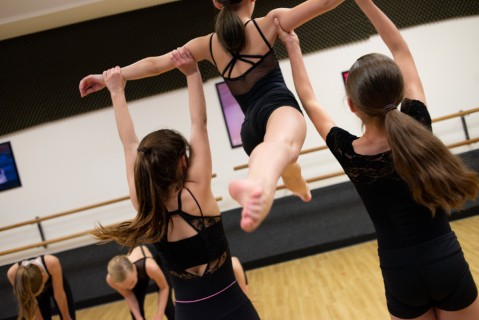
Around 10–13, dancers are ready to move beyond just ‘following along’ and start building real power and artistry. Whether your child is brand‑new to dance or has trained before, this stage is about layering stronger coordination, memory, and performance, one small win at a time.
Coordination & Movement
Powerful leaps and jumps with polished form
Quick, seamless direction changes
Long, strong leg lines and pointed toes with precision
Balanced turns with accurate spotting and flow
Using props (ribbons, batons, etc.) inside choreography, not just as toys
What you might notice at home:
Them critiquing their own jumps, turns, and lines.
If they’re new to dance, these will show up slowly over time as they gain strength and confidence.
Brain & Memory Skills
Follow intricate, multi‑step combos (“step, chassé, kick, turn, leap, hold”)
Respond to highly detailed verbal and visual cues
Remember 10–12 step sequences
Stay focused for 60–90 minutes of serious work
What you might notice at home:
Running full sections of dances, correcting themselves mid‑routine, and talking about “counts,” “sections,” and “cleaning.” Newer dancers may still mix things up – that’s normal. The goal is that they keep trying to remember more on their own.
Social & Emotional Skills
Dancing in complex group choreography with real ensemble awareness
Being held to a higher standard for responsibility and effort
Starting to show leadership and peer support
Learning to take frequent corrections without shutting down
What you might notice at home:
More talk about rehearsals, shows, and sometimes frustration – because they care.
Music & Creativity
Moving to intricate rhythms with precise timing
Adjusting movement to musical dynamics and structure (accents, phrases, mood shifts)
Creating original phrases with real independence
What you might notice at home:
Very specific song choices, story‑driven solos in the living room, and “I’m working on this combo” moments.
Each time your child has one of these ‘wins,’ add a sticker or checkmark. At the end of 30 days, celebrate how far they’ve come.
Packed their own bag (shoes, water, hair) and arrived on time
Went into class focused and ready to work
Followed a multi‑step instruction (3–5 steps, or more at higher levels)
Followed a multi‑step correction (e.g., fix arms + timing + direction)
Remembered and ran a full section of choreography at home
Asked a good question in class to understand something better
Took a tough correction and tried again instead of giving up
Encouraged or helped a teammate
Talked about what they’re working on
Showed growth in self‑talk (less “I’m bad,” more “I’m still working on it”)
1. 12‑Step Combo Test
Ask them: “Teach me 8–12 counts from your dance.”
Let them teach it and correct you.
Then ask: “Which part do you want to clean?” and repeat just that 3–5 times.
Builds: memory, detail, ownership.
2. Music Map
Put on their dance song.
Ask: “Where does the big jump go? Where’s the turn section? Where’s the ending pose?”
Have them point or mark those parts as the music plays.
Builds: musicality, structure awareness.
3. Growth Reflection
Once a week, ask:
“What’s one thing that felt easier this week?”
“What’s one thing you’re still working on?”
Write it on a sticky note they see near their bag.
Builds: self‑awareness, growth mindset instead of all‑or‑nothing.