- Dance Classes & Music Lessons
- 310.406.1730


At Home Confidence Kit: 6-9 Year Olds
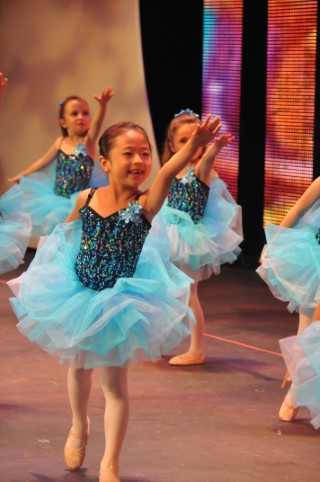
From 6–9, dancers move from “copying steps” to owning dances. They’re learning real technique, longer routines, and how to be a good teammate. As they go from Level I (around 6/7) to Level II II+ (around 8/9), the same skills get deeper and more precise. Here’s what our 6–9‑year‑olds are practicing all year:
Coordination & Movement
Doing precise single‑foot jumps, small leaps, and direction changes
Moving sideways with smooth, quick transitions
Pointing toes and stretching legs with strong, consistent alignment
Balancing on one foot with real control
Using props (ribbons, batons, fans, etc.) inside choreography
Turning with spotting and clean posture (multiple steps in a row)
What you might notice at home:
Bigger, more controlled leaps, cleaner spins, and them correcting their own “messy feet” or posture.
Brain & Memory Skills
Following multi‑step instructions like “step, chassé, pivot, leap, pose”
Listening to layered cues (arms, feet, direction, and timing together)
Remembering and repeating 5–10‑step combinations
Matching steps to music phrasing, accents, and mood
Staying focused in class on a sequence for 20–60 minutes
What you might notice at home:
They can show you long chunks of choreography, fix themselves when they “mess up,” and talk about “counts” or “phrases.”
Social & Emotional Skills
Dancing in lines, groups, and formations with real teamwork
Taking turns and sharing space/props without being told
Taking corrections from teachers and using them
Starting to lead, help, or be an example for others
Dealing with normal frustration and self‑criticism (“I messed up”) and learning to work through it
What you might notice at home:
More talk about classmates and shows, some “I’m not good at this” moments, and a growing pride when they nail something hard.
Music & Creativity
Moving to complex rhythms with accurate timing
Adjusting movement to tempo, dynamics, and emotion (sharp vs soft, big vs quiet)
Dancing as characters within a story, not just doing steps
Creating their own short combinations with minimal help
What you might notice at home:
More sophisticated “routines,” specific song choices for moods, and strong opinions about how a move “should look.”
Each time your child has one of these ‘wins,’ add a sticker or checkmark. At the end of 30 days, celebrate how far they’ve come.
Arrived on time, ready (hair, shoes, water) with minimal reminders
Went into class independently and settled in quickly
Followed a multi‑step instruction (3–5 steps, or more at higher levels)
Stayed focused and working for most/all of the class
Practiced a step or combo at home without being asked
Took a correction from the teacher and tried again
Showed you part of a dance at home (4+ steps in a row)
Handled frustration (messed up, then tried again instead of melting down)
Encouraged a classmate, shared space, or was a good teammate
Talked about what they learned (“We worked on leaps,” “We fixed our ending”) instead of just “It was fine”
1. 8‑Count Combo Builder
Start small for Level 1 Prep / Level 1:
You give: “step, clap, turn, pose” (4 counts).
They repeat it, then add 4 more counts of their own.
For Level 1–2 / Level 2:
Ask them to build a full 8‑count phrase and teach it to you.
Builds: multi‑step memory, choreography building, leadership.
2. Tempo Switch
Put on a song.
Call out: “When it’s slow, move smooth and stretchy. When it’s fast, move sharp and quick.”
Halfway through, flip it: “Now do the opposite!”
Let them be the caller and you follow.
Builds: dynamics, musicality, quick adaptation.
3. Performance Run‑Through
Say: “Pretend this is the show. Can you dance your routine (or part of it) all the way through without stopping?”
Watch once without interrupting.
Afterwards, ask only:
“What part felt best?”
“What part do you want to practice again?”
Builds: stamina, self‑reflection, performance mindset without nitpicking.