- Dance Classes & Music Lessons
- 310.406.1730

Archives: Dance & Music Blog
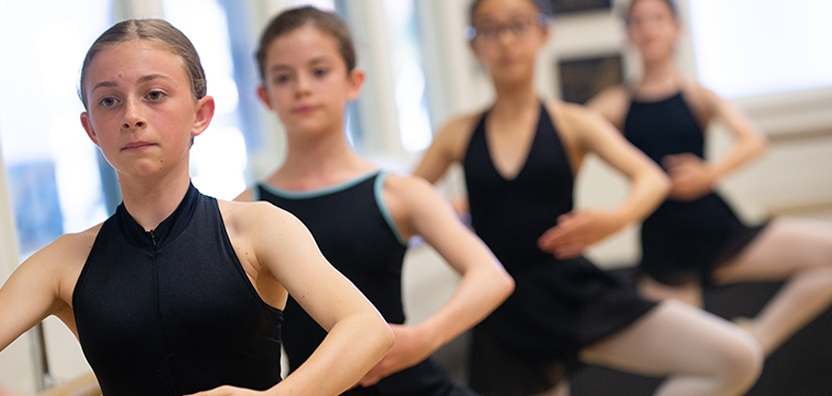

If your child wants to get better at ballet, the environment matters. A Ballet company gives them the training, coaching, and a path—fast.
Elite training that compounds
Build strength, lines, artistry, and work capacity—habits that separates recreational dancers from company performers.
.
More time on stage = confidence on demand
Shows, full productions, dancing with other ages and features build presence, musicality, and nerves-of-steel performance.
More lights = more growth.
Mentorship and career guidance
Train with peers who want it. Accountability, feedback, and real camaraderie.
Kids stick when they belong—identity shifts from “I take class” to “I’m a dancer.”
Life skills beyond dance…
Discipline, time management, resilience, self-assessment. Balancing school + training builds adults who execute, not just dream.
Real pathways…
Visibility to directors, master teachers, workshops, and auditions.
Clear steps to college scholarship programs, and leadership roles.
Bottom line
Ballet company compresses the timeline from “I love dance” to “I perform with confidence.” More training. Different Environment. Clear path. That’s how kids win—on stage and in life.
Ask about our Ballet Company Today!
Strong teams build strong kids. Here’s the real value—scannable, no fluff.
Community & Social Benefits
Belonging on day one
Shared training and performances create fast friendships and a built-in support system.
Less isolation, more “my people.”
Teammates push, praise, and pick each other up.
Collective wins = more confidence than going it alone.
Real relationships, real doors
Coaches, choreographers, and older dancers become your child’s network—mentors, opportunities, collaborations.
Personal Growth & Skills
Commitment that sticks
Show up, do the reps, master the routine. Kids learn dedication over hype—results compound.
Discipline and accountability
Your effort affects the group. Ready on time, prepared, consistent.
That’s a life skill, not just a dance skill.
Range and versatility
Multiple styles, varied stages. Kids learn to adapt, communicate, and solve problems at speed.
Resilience over opinions
Teams focus on growth and execution, not outside noise. Safe place to take risks and discover who they are.
Practical Advantage
More stage time, faster growth
Reps under lights build presence and poise.
Resources you don’t get alone
Structured coaching, reserved space, prioritized scheduling—and often access to privates, workshops, and support systems.
ig picture becomes visible—and achievable.
Kids stick when they belong
Ready to roll?
Sign ups end Sep 6th for the school year. Come try a class!
Bottom line: Teams compress growth.
Your child gets community, confidence, and more reps—on stage and in life!
Keep it simple. Get your child in class, reduce friction, and stack early wins.
1) What to wear for your first class.
Intro Class = simple: if you have a leotard great, if not comfy tee/leggings, socks, and hair up is great : )
Your dancer will eventually need a leotard, tights and ballet shoes. But don’t worry about it for your first class as we will guide you which are best to buy afterwards. Having your child wear a required dancewear once he or she registers will help teachers see alignment and improve their concentration.
2) Hair without tears
Hair away from face is all that is needed until higher level ballet classes where you fill find that a hair net will be your friend.
3) Make their experience better!
Please be on time for your dance class. This will mean to arrrive 10 minutes early. Seeing friends and having a mini ritutal with saying goodbye to a parent will give everyone a better experience.
4) Toddler and Preschool children’s nerves are normal. Follow the studio plan (window watch/parent) child stays outside the dance room until ready to join. 2 minutes on the dance floor is a win! Celebrate small wins and be patient with your fist month!
5) First‑week mindset
Goal isn’t perfection; it’s one visible win: step on the floor, touch a prop, finish warm‑up.
Praise effort: “I saw you try—that’s a win.” Be patient your first month. Confidence stacks fast with tiny wins. You will help them build their confidence one high-five a time!
Fun fact: Future start dance soloists are commonly students that had a harder time starting.
Ready to start building your child’s confidence?
Book am Intro. Simple dress code, fast check‑in, parent‑join option for shy kids. If you’re not thrilled after the first class, you don’t pay, try again!
Parents who want real ballet results: pick a studio, not a “keep-them-busy” after-school slot.
1. Higher-Quality Instruction
Studio classes are led by trained ballet pros who specialize in early childhood movement and proper technique.
After-school programs are usually general movement, led by preschool staff, providers that don’t limit advancement pathways, or part-timers with limited dance-specific training.
2. Built-for-Dance Environment
Studios have sprung or top of the line floating floors, mirrors, barres, and space to move safely and correctly.
Classrooms and multipurpose rooms lack the flooring, mirrors, and room needed for quality ballet.
3. Focused Kids, Better Learning
At the studio, ballet is the main event. Kids arrive ready to dance, focus, and improve.
After-school sessions hit when kids are tired and distracted—less energy, less learning, less fun.
4. Clear Progress and Performances
Studios follow a real curriculum with skill milestones and performance opportunities (recitals, showcases).
After-school is casual with limited structure and minimal performance experience—no clear path or goal to chase.
5. Confidence from a Dance Community
Studios surround your child with dancers of all ages—role models, friendships, and a strong sense of belonging.
Preschool programs feel isolated and short-term—no deeper connection to the world of dance.
If you want your child to fall in love with dance and actually progress, choose the environment built for it.
Come try an Intro for your dancer today!
If your child melted down at their first few classes —you’re not behind! You’re normal. Growth looks messy before it looks magical.
Why dance matters (especially when the start is wobbly)
Focus: eyes/ears/body working together.
Confidence: tiny wins stack into “I can do hard things.”
Community: kids copy peers; belonging beats fear.
Emma didn’t make it into the dance room in week 1 or 2. Week 3 she just wanted to hold the prop but not participate. Teacher waved at her through the window. Week 4, two minutes on the floor. Week 5, took half the class. Today she leads our “tap time”
Courage isn’t loud—it’s consistent. Your child will catch up fast when we stack tiny wins.
Olivia clung to mom and cried when the music started for dance class.. We switched to Parent & Me for a few weeks and practiced a 10‑second “in-and-out” routine, and celebrated one clap pattern at home. On week 4 she entered the room herself.
Progress, not perfection.
What parents can do (simple works)
Arrive 10 minutes early—new spaces feel safe when they’re familiar.
Pre‑class ritual: bathroom, sip of water, high‑five the teacher before class.
One goal only: touch one prop, or stay on the floor for 60 seconds. Win = done.
We’re holding “Restart Week” spots for families who though their child wasn’t ready!
Schedule another Intro Lesson today!
If your child is younger than 8 years old, start with dance! Here’s why it beats soccer as a first step—and sets them up for everything after.
1. Builds motor skills earlier
Dance trains balance, coordination, posture, and fine motor control (toe points, arm paths). That’s body awareness you can’t get chasing a ball in a crowd. Soccer is great later; at this age it’s mostly run-and-kick.
2. Sharpens focus and learning
Kids listen, follow multi-step directions, remember sequences, and feel rhythm. That’s classroom readiness—attention, working memory, and discipline. Soccer leans more free play, less precision early on.
3. Teaches patience and self-control
Structured turns, moving on cue, personal space. Calm environment = fewer meltdowns and better emotional regulation. Early soccer often turns into “bee-ball” chaos—fun, but not great for impulse control.
4. Unlocks creativity and confidence
Music + story + movement let kids express feelings safely. Expression builds confidence faster than scoreboards. Team sports rarely give that at this age.
5. Matches developmental pace (no “win” pressure)
Progress is personal—master a skill, then the next. Kids grow without comparison or overwhelm. Confidence stacks, week by week.
Bottom line: Start with dance to build the foundation—motor control, focus, patience, creativity, and confidence. Soccer will be better later because of it.
Schedule an intro dance class today!
It’s often unhelpful to put a huge decision on a 3‑ or 4‑year‑old after just one trial class, especially if your real goal is for them to get the full developmental benefits of dance over time.
Three‑ and four‑year‑olds are still learning how to persist with anything that feels unfamiliar, hard, or a little uncomfortable. A first dance class can be overwhelming: new room, new teacher, new rules, other kids, loud music, and lots of instructions. Their “no” after one class usually means:
Research on mastery motivation in preschoolers shows young children build persistence by returning to slightly challenging activities repeatedly, not by quitting after the first difficulty. If we immediately hand them the exit option, we accidentally reward avoidance instead of helping them learn to stick with something long enough to feel capable.
For preschoolers, liking an activity usually comes after they feel some success and comfort, not before.
That means the second, third, and fourth classes are often where you see:
If you ask, “Do you want to stop?” right after the hardest moment—when everything is still new—you may be freezing them at the most anxious version of the experience instead of giving them a chance to grow into it.
When a child stays in a well‑designed preschool dance class for a full season, they’re getting far more than cute steps.
Authoritative early‑childhood and developmental sources describe benefits that align directly with what you promise families: courage, focus, resilience, self‑esteem, and mastery.
Dance is an ideal way to build preschoolers’ gross motor skills, balance, and coordination—key foundations for later sports, playground competence, and self‑confidence.
These abilities do not emerge from one class; they develop over weeks and months of guided practice.
Several early‑childhood frameworks highlight attention and persistence as critical predictors of later academic success.
In dance, children practice:
These experiences build the “stick‑with‑it” muscle that children need for school tasks later on—like learning to read, writing their name, or finishing projects.
Preschoolers are just beginning to learn how to manage feelings like frustration, shyness, or embarrassment. Research on grit and perseverance in early childhood shows that gently challenging tasks, done regularly with support, help children learn to tolerate discomfort and keep going.
In an ongoing dance class, they practice:
Those repetitions build resilience, emotional coping skills, and a growth mindset—skills that won’t develop if we pull them out the moment something feels hard.
Authoritative early‑childhood sources emphasize how much young children depend on predictable routines to feel secure and confident.
A weekly dance class becomes:
This consistency reduces anxiety and supports emotional stability, independence, and self‑esteem.
Good early‑childhood practice aims to build intrinsic motivation—doing something because it’s interesting or satisfying, not just because a grown‑up asked or there’s a reward.
Children usually become intrinsically motivated when:
That only happens if they stay long enough to move from “I can’t” to “I’m getting it!” A single class rarely gives a three‑year‑old time to experience mastery.
When we immediately ask a 3‑ or 4‑year‑old, “Do you want to keep going to dance?” right after a first class, several things can happen:
It’s not that children should never have a say; it’s that one data point—a single first class—is not a reliable basis for an important developmental decision.
Instead of framing it as “Do you want to quit or keep going?” after class one, you can guide families toward a developmentally appropriate middle ground:
You could summarize the core message for your families like this:
If you’d like, I can next help you:
Creative and Music Skills in a Mommy & Me Dance Class
In a Mommy & Me dance class, pretending to be animals, swaying to music, clapping, and “freezing” when the music stops aren’t just cute games. They quietly build creativity, imagination, listening, and early music skills in a way that feels fun and natural for very young children.
Creative skills: pretending and imagination
When your toddler:
1. Crawls like a kitten
2. Floats like a cloud
3. “Falls asleep” like a teddy bear
they’re practicing pretend play and role‑play. This helps them:
1. Use their imagination
2. Try on different ideas and feelings
3. Practice simple storytelling and language
These early “let’s pretend” moments are the start of creative thinking and flexible problem‑solving.
Music awareness: feeling beat and rhythm
Music time in class helps your child start to feel how music works in their body.
In Mommy & Me, they:
1. Sway to slow songs with you, learning to move to a steady beat
2. Clap, pat, or stomp on the beat, which builds timing and coordination
3. Move fast or slow as the music changes tempo (running, marching, or tiptoeing)
All of this strengthens listening, body awareness, and the basic sense of rhythm they’ll use later in music and dance.
“Freeze” games: listening and self‑control
Freeze dance is more than giggles.
When the music plays, kids move. When the music stops, everyone freezes. In that simple game, your child practices:
1. Listening for when the sound stops
2. Stopping their body on cue
3. Waiting, then starting again with the group
That’s early self‑control and focus, wrapped inside a game they love.
Why these skills matter
In a Mommy & Me dance class, your child is:
1. Growing their imagination through pretend play
2. Building music awareness by feeling beat, rhythm, and tempo
3. Practicing listening and self‑control with stop‑and‑go games
These are the same skills that support later learning in school, music, and dance.
How we do this at School of Dance & Music
At School of Dance & Music in Hermosa Beach, our Mommy & Me classes are designed to build these creative and music‑awareness skills on purpose:
1. Simple pretend games (animals, weather, shapes) to spark imagination
2. Easy beat and rhythm activities (clap, pat, sway, march)
3. Fun freeze and stop‑and‑go songs to practice listening and control
Your child isn’t just “burning energy.” They’re building a creative brain and a musical ear, with you right there beside them.
Dance camp is one of the strongest summer choices you can make for a child, because it combines everything research says kids need from camp—movement, creativity, social connection, and skill‑building—into one experience.
For preschoolers, dance camp is really creative movement + summer camp structure.
Research on early childhood dance and creative movement shows that guided movement helps young children:
Develop motor skills and body awareness (stretching, jumping, spinning, balancing).
Practice coordination, posture, and spatial awareness.
Explore feelings and imagination through movement and pretend play.
The Benefits of Creative Movement Dance for Young Children:
https://northpointedance.com/the-benefits-of-creative-movement-dance-for-young-children/
Early childhood dance education studies also note that dance supports social and emotional development, as children learn to:
Take turns and follow group cues.
Cooperate in simple group dances and games.
Express emotions non‑verbally in a safe, playful setting.
Why summer camp matters here:
Research on summer camps shows that even short camp sessions help young children build independence, social comfort, and a sense of belonging in a supervised environment. The American Camp Association’s national outcomes study found that camp experiences improve:
Self‑esteem
Peer relationships
Independence
Social comfort and friendship skills
National Outcomes Study – American Camp Association:
https://www.acacamps.org/resources/national-outcomes-study-program-improvement-project
For ages 3–5, a dance‑based summer camp gives them:
Daily chances to move and practice coordination.
A gentle introduction to being in a group without parents, with caring adults and fun routines.
A safe place to pretend, create, and explore music and movement—exactly what early‑childhood experts recommend.
For children 6–9, dance camp becomes a powerful skill and confidence builder.
Dance education in early childhood and the early school years has been shown to:
Improve physical fitness, coordination, balance, and strength.
Support cognitive skills such as concentration, problem‑solving, and spatial reasoning.
Provide an outlet for emotional expression and self‑confidence.
The Importance of Dance in Early Childhood Education (overview of benefits):
http://www.dancedynamicslv.com/dd-blog/2023/9/5/the-importance-of-dance-in-early-childhood-education-for-nurturing-growth-and-development
Research on camp experiences in this age group also shows strong benefits. A national outcomes study and later impact studies from the American Camp Association and university partners found that high‑quality camp experiences promote:
Independence and responsibility.
Social awareness and friendship skills.
Leadership, decision‑making, and resilience.
ACA – Youth Development Outcomes of the Camp Experience:
https://www.acacamps.org/resources/directions-youth-development-outcomes-camp-experience
Empowering young people – impact of camp experiences (open‑access research article):
https://pmc.ncbi.nlm.nih.gov/articles/PMC10899333/
In a dance camp for ages 6–9, this translates into:
Technical and artistic growth: more time to work on alignment, turns, jumps, musicality, and choreography than in once‑a‑week classes.
Performance confidence: informal in‑camp “shows” and sharings help children practice being on stage in a low‑pressure setting.
Teamwork and friendship: group dances, warm‑ups, and games require cooperation, shared timing, and mutual support.
Because camp is immersive (several days in a row, often multi‑hour sessions), children get to see and feel their progress quickly, which research suggests increases motivation and self‑belief.
General summer‑camp research shows that camps of all kinds support youth development, but that outcomes are strongest when programs:
Offer engagement + belonging + active, hands‑on learning.
Provide supportive relationships with adults and peers.
Are attended across multiple summers.
American Camp Association – Breakthrough Study on Camp Benefits:
https://acanynj.org/breakthrough-study-from-american-camp-association-outlines-the-benefits-of-camp-experiences/
Dance camp naturally checks all of these boxes:
Engagement – music, movement, costumes, and creativity keep children actively involved.
Belonging – being “part of the group” in a class, team, or end‑of‑week performance.
Experiential learning – learning by doing: choreography, improvisation, games, and performance.
For 3–5‑year‑olds, dance camp is an ideal first camp experience that feels like playful movement and imagination.
For 6–9‑year‑olds, it’s a powerful way to deepen technique, build confidence, and strengthen friendships—while still getting all the broader social‑emotional benefits of summer camp documented in youth‑development research.
If a family is choosing just one summer activity, dance camp brings together movement, creativity, camp outcomes, and emotional growth in a single, research‑aligned choice.
Here’s the article again with the source link typed out clearly so you can copy and paste.
Voice lessons can be a wonderful experience for kids, but timing and format matter, especially when you want healthy, long‑term vocal development. For most children, ages 7 and up is a smart time to begin private singing lessons in a structured way.
Children’s voices and bodies are still developing throughout childhood. Voice‑pedagogy and child‑voice specialists generally caution against intense, technique‑heavy training too early, because the vocal folds and supporting systems are delicate and still maturing.
Many child‑voice experts emphasize that:
Truly intensive, adult‑style technique training is best reserved for later, typically early teens, when the larynx and vocal folds are more fully developed.
Before adolescence, kids benefit most from light, age‑appropriate singing lessons that focus on musicianship (pitch, rhythm, breathing, listening) and easy, healthy sound—not on forcing power, range, or “belt” qualities.
One detailed overview on protecting children’s singing voices explains that healthy early training should prioritize fun, light singing, good posture, breathing, and musicianship, and avoid sustained loud singing, extreme ranges, or pushing the voice.[How to Protect a Child’s Singing Voice]
Article: How to Protect a Child’s Singing Voice – Kayla Collingwood
https://www.kaylacollingwood.com/post/how-to-protect-a-childs-singing-voice
By around age 7, most children:
Can concentrate for a 30‑minute lesson.
Understand and follow multi‑step instructions.
Have better breath control and body awareness than very young children.
That makes 7+ a developmentally sensible age to begin structured singing lessons, as long as the approach remains gentle and child‑appropriate.
Group music classes are wonderful for toddlers and early childhood, but once a child is ready for real voice lessons, private instruction offers key advantages.
Each child’s voice is unique: range, speaking habits, breath patterns, and tension differ from one child to another. In a one‑on‑one lesson, a teacher can:
Choose keys and ranges that sit comfortably for that specific child.
Notice signs of strain (tight neck, pushed sound, hoarseness) and adjust immediately.
Tailor warmups and exercises to the child’s stage of vocal and physical development.
Child‑voice safety guidance emphasizes watching closely for any signs of tension or fatigue and stopping before strain occurs—something that is much easier in a private setting where the teacher can listen only to that one voice.[How to Protect a Child’s Singing Voice]
In private lessons, teachers can:
Move faster with an eager 9‑year‑old or slower with a shy 7‑year‑old.
Pick songs that fit the child’s interests and a healthy vocal range.
For children, recommended repertoire avoids very high, very low, or very loud singing and favors songs that allow frequent breaths and natural speech‑like tone.[How to Protect a Child’s Singing Voice] Private coaching makes this kind of customization straightforward.
Private voice lessons also give time and space for:
Ear training and pitch‑matching.
Simple music reading and rhythm work.
Basic posture and breathing habits suited to a growing body.
Experts on child singing recommend focusing early training on musicianship and ease of sound, not on building a big, adult‑sounding voice.[How to Protect a Child’s Singing Voice] One‑to‑one lessons allow the teacher to keep that focus clear.
For children 7 and older, developmentally appropriate singing lessons typically:
Last about 30 minutes, with variety to match attention span.
Combine fun songs with short warmups, listening games, and maybe light movement.
Emphasize relaxed breathing, good posture, and easy, unforced sound.
Avoid pushing range, volume, or stylistic extremes.
A child should leave a lesson feeling comfortable and happy, not vocally tired or hoarse. If they’re frequently strained or losing their voice, that’s a sign the training is not age‑appropriate.[How to Protect a Child’s Singing Voice]
Starting around age 7, taught this way, singing lessons:
Build a solid musical foundation (ear, rhythm, basic reading).
Introduce healthy vocal habits early.
Grow confidence and joy in singing before the voice changes in adolescence.
For most children, 7 years and up is a reasonable age to begin private singing lessons, because:
They are developmentally ready to focus and follow coaching.
Lessons can emphasize musicianship and healthy, easy vocal use.
One‑to‑one teaching lets a trained instructor protect the child’s developing voice and adapt to their individual needs.
This approach aligns with expert guidance on children’s vocal health: early singing instruction should be gentle, age‑appropriate, and individualized, with the long‑term goal of a strong, healthy, and confident voice—not quick, dramatic results.
Kayla Collingwood – How to Protect a Child’s Singing Voice
https://www.kaylacollingwood.com/post/how-to-protect-a-childs-singing-voice