

Why Dance Classes Are One of the Best First Activities for Young Children (Even Better Than Soccer!)
For very young children, dance is one of the best first activities you can choose. It builds fundamental motor skills, focus, self‑control, creativity, and music awareness in a way that perfectly matches early childhood development. Team sports like soccer are great later on, but at this age, dance often provides a more complete developmental foundation.
1. Builds foundational motor skills earlier
Dance helps young children develop balance, coordination, posture, and both gross and fine motor control. These are essential building blocks for any sport or physical activity later.
Research on educational dance with children has found that structured dance programs improve motor development, including balance, coordination, and overall movement quality, and that these gains are still evident months after the program ends.
Open‑access study on educational dance and motor development:
https://pmc.ncbi.nlm.nih.gov/articles/PMC6202892/
At very young ages, soccer tends to focus mainly on gross motor skills like running and kicking, often in a chaotic group. Dance, by contrast, includes:
- Precise movements (toe pointing, arm placement, controlled turns).
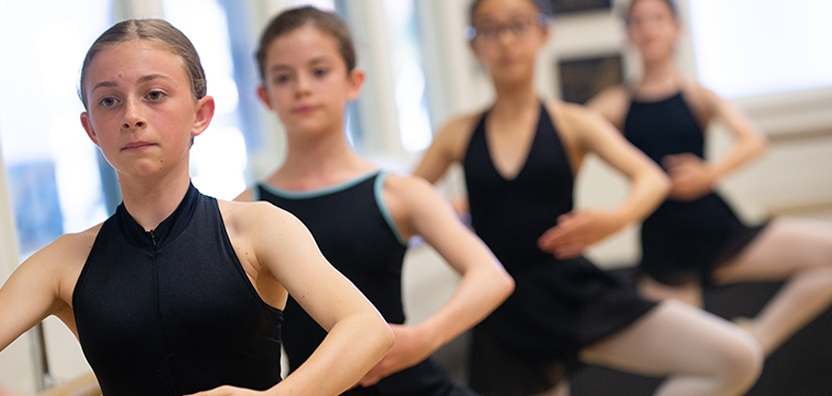
- Posture work (standing tall, core engagement).
- Coordinated patterns (moving arms and legs together to music).
These fine‑tuned skills support later success in any sport by giving children stronger body awareness and control early on.
2. Boosts focus, memory, and learning skills
In dance class, children must listen, follow directions, and remember sequences of steps. This kind of structured, patterned movement acts as a “motor‑cognitive” task, which research shows can strengthen executive functions like working memory, attention, and cognitive flexibility.
A randomized controlled trial on early‑childhood DanceSport found that an 8‑week dance intervention improved preschoolers’ executive functions, including inhibition (self‑control), working memory, and cognitive flexibility, more effectively than simple aerobic activity alone.
Early‑childhood DanceSport and executive functions (open‑access):
https://pmc.ncbi.nlm.nih.gov/articles/PMC12246420/
Other research has also found that physical activity is positively linked to self‑regulation and cognitive school readiness in preschoolers, suggesting that structured movement can support attention and learning skills useful in preschool and kindergarten.
Physical activity, self‑regulation, and school readiness:
https://pmc.ncbi.nlm.nih.gov/articles/PMC8619721/
Dance classes naturally ask children to:
- Listen to the teacher’s voice and the music.
- Follow multi‑step directions (“first jump, then clap, then turn”).
- Remember short combinations in order.
Soccer at this age is often more reaction‑based and free‑form, with less emphasis on remembering precise sequences or moving on exact counts. That makes dance especially powerful for early focus, memory, and classroom‑readiness skills.
3. Teaches patience and self‑control in a calm, structured setting
Preschool dance classes are typically highly structured: children wait their turn, stand on a spot, move only when the music or teacher cues them, and practice stopping and starting together. These are all elements of self‑regulation and emotional control.
Research on self‑regulation and movement indicates that moderate‑to‑vigorous physical activity, especially when combined with rules and structure, is associated with better self‑regulation and cognitive readiness in preschoolers.
Self‑regulation and movement overview:
https://pmc.ncbi.nlm.nih.gov/articles/PMC8619721/
https://www.yourtherapysource.com/blog1/2024/09/26/self-regulation-and-movement/
In dance, children practice:
- Waiting their turn to go across the floor.
- Stopping on a “freeze” or ending pose.
- Respecting personal space and moving safely around others.
Young soccer groups, by contrast, often involve many children chasing a single ball with less structure and fewer turn‑taking expectations. That can be fun, but it provides fewer opportunities to practice quiet control, waiting, and moving on cue—skills that are especially important for success in school and everyday life.
4. Encourages early creativity and self‑expression
Dance invites children to pretend, imagine, and express feelings through movement in ways team sports rarely do at this age. Early‑childhood research on pretend play and dramatic play shows that imaginative movement and role‑play support:
- Creativity and flexible thinking.
- Emotional expression and understanding.
- Social and language development.
Dramatic play in early childhood:
https://www.pennfoster.edu/blog/benefits-of-dramatic-play-in-ece
Pretend play and self‑regulation (open‑access article):
https://pmc.ncbi.nlm.nih.gov/articles/PMC10766374/
When children move like gentle animals, act out stories with their bodies, or “dance how the music feels,” they are:
- Exploring emotions non‑verbally.
- Practicing imagination and storytelling.
- Developing a sense that their ideas and feelings matter.
Soccer at this age is primarily about chasing, kicking, and simple game concepts, with less emphasis on imagination or artistic expression. Dance adds a rich layer of creativity and culture, not just physical activity.
5. Better fit for early developmental readiness
For many very young children, the individualized, non‑competitive nature of dance fits their development better than team sports. Dance allows each child to progress at their own pace, with success defined by personal growth (learning a new step, remembering a sequence, feeling brave enough to perform) rather than by scoring or winning.
Research on music and movement in early childhood highlights that structured music‑and‑movement sessions support holistic development—integrating motor, cognitive, social, and emotional growth—through singing, dancing, and rhythmic play tailored to young children’s abilities.
Music and movement for preschoolers (early childhood musical play):
Using music with infants and toddlers (ZERO TO THREE):
Dance classes for young children typically:
- Use small groups and predictable routines.
- Offer lots of repetition and encouragement.
- Emphasize effort and participation over performance outcomes.
This makes dance an especially gentle and developmentally appropriate “first activity”, where children can build confidence step by step before moving into more competitive team sports like soccer later on.
Sources
- NCBI / PMC – The Influence of Educational Dance on the Motor Development of Children
- https://pmc.ncbi.nlm.nih.gov/articles/PMC6202892/
- NCBI / PMC – The Effects of Early Childhood DanceSport Intervention on Executive Functions
- https://pmc.ncbi.nlm.nih.gov/articles/PMC12246420/
- NCBI / PMC – The Relationship between Physical Activity, Self‑Regulation and Cognitive School Readiness in Preschool Children
- https://pmc.ncbi.nlm.nih.gov/articles/PMC8619721/
- Your Therapy Source – Self Regulation and Movement: How Physical Activity Supports Self Regulation
- https://www.yourtherapysource.com/blog1/2024/09/26/self-regulation-and-movement/
- Penn Foster – The Impact of Dramatic Play in Early Childhood Education
- https://www.pennfoster.edu/blog/benefits-of-dramatic-play-in-ece
- NCBI / PMC – Pretend Play as the Space for Development of Self‑Regulation
- https://pmc.ncbi.nlm.nih.gov/articles/PMC10766374/
- ZERO TO THREE – Beyond Twinkle, Twinkle: Using Music with Infants and Toddlers
- https://www.zerotothree.org/resource/distillation/beyond-twinkle-twinkle-using-music-with-infants-and-toddlers/
- Learn and Play Hooray – Music and Movement Ideas for Preschoolers: Early Childhood Musical Play
- https://www.learnandplayhooray.com/post/music-and-movement-ideas-for-preschoolers-early-childhood-musical-play